Essay On Maternal Gothic Novels Up On the Ploughshares Blog

Essay On Maternal Gothic Novels Up On the Ploughshares Blog

READ the essay HERE

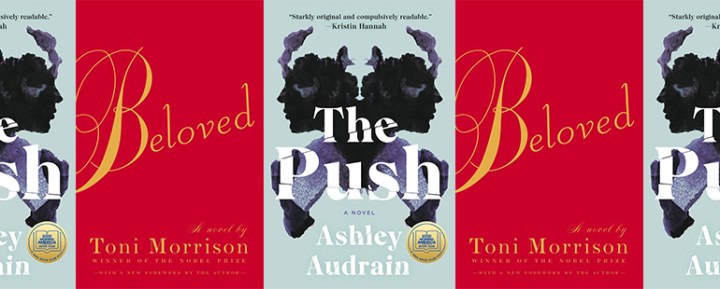
I’ve been on the lookout for contemporary gothic novels by women for research I’m doing on my next novel, and Ashley Audrain’s new book The Push came to me at exactly the right moment. I was blown away by its intricate structure and creepy, claustrophobic content. I loved the way Audrain used the gothic form to craft a story about motherhood, and saw her as working within a maternal gothic tradition that goes all the way back to Mary Shelley in Frankenstein. Audrain’s book has so much to say about white, upper middle class motherhood and I felt myself reflected in much of what she wrote–the insistent pressure to talk about how “it’s all worth it!”, the lack of social and familial connections, the taboos around asking for help were all familiar.

As I was reading, I was also struck by similarities to Toni Morrison’s Beloved, which I wrote my Master’s thesis on. I started taking craft notes on the points of connection, and eventually found that I was sitting on an essay idea that I was excited about. I am so grateful to have had the opportunity to work with Ellen and Carly at Ploughshares. They were both such smart, kind editors who helped me get this piece into good shape. If you’re interested you can read the essay here.

“A Mother is Not a Zero-Sum Game” Up at The Normal School

“A Mother is Not a Zero-Sum Game” Up at The Normal School

Throughout that time—and even now— I felt so betrayed by my body and by the medical system. I’d had a difficult pregnancy, a difficult labour, and then a complicated, incomplete recovery. I’d first gone into pregnancy thinking it would be easy—I’d weathered worse, I told myself, and I’d get through it unscathed. Well. I was wrong. And as I was dealing with birth injuries and other serious medical issues stemming from labour, there was this overwhelming social pressure to distill all of my experiences into the narrow, oxymoronic framework of sleepless joy.

Since the only way I can make sense of anything is by writing it down, I started taking notes in a single document while still in the thick of it all. Every day, I laid down new sentences, paragraphs, and fragments in an effort to understand what was happening to me. The fragments gradually started to take a shape, eventually coalescing into an essay. I am so grateful to the Normal School for publishing it. 

Since it’s gone up, I’ve been overwhelmed by the responses I received from women on social media. So many mothers reached out to thank me because they saw so much of their own experiences reflected in my story. I was completely unprepared for how many other women have silently endured labour trauma, and I’m so grateful to all who’ve reached out to share their own stories with me. 

What is abundantly clear is that we need to make more space for women to be honest about our experiences—no matter how messy or complicated or uncomfortable those experiences may be.