I’m honored to have received a second grant from the Canada Council. This one is to revise a post-apocalyptic feminist novel that I’ve been working on for a while now. It’s a bit Arcadia meets The Handmaid’s Tale. I’m forever grateful for the support they’ve offered.
Author: elainevandergeld
“Edges” now in the Dalhousie Review

My short story “Edges” is now available in the Dalhousie Review! I’m happy to be published alongside so many other wonderful writers.
I wrote the rough draft for this on holiday in Portugal a little over four years ago. My daughter was a year old, but I still felt the sting of postpartum life. While this piece is definitely not autobiographical, all I could think about in those days was the way mothers are so isolated in that postpartum period. The initial story came quickly, but I took a long time with editing it. I started sending it out to places a few months after the first draft, and had really positive, personal rejections, but no takers. I stopped sending it out for reasons I don’t quite remember. I was working on books, COVID hit, and then I think I lost faith in the piece, to be honest.
Then, last year, I re-read it and really liked it. I decided to send it out again, and the Dalhousie Review accepted it very quickly. I’m pleased to finally see it out in print after such a long journey!
“All the Infinite Variations” at Minola Review

My story, “All the Infinite Variations” is now up at the Minola Review.
This story has a special place in my heart. I started writing this piece 5 years ago when I returned to writing after a long hiatus . I’d drifted from writing after finishing an MA in English, even though I knew I wanted a career as a writer. It just didn’t seem practical. My scholarship was finished, I was fresh out of a relationship and couldn’t afford my apartment anymore, and I was living in the attic of a friend’s mother. At one point, I was working five jobs and just trying to figure out how I was going to support myself outside of academia.
Then, after finishing another degree, and moving cities, moving countries, and establishing a career, I woke up one day and realized it had been seven years since I had written a thing. I knew that if I were to die the next day that my one big regret would be that I’d never written a book. So, I took baby steps. I signed up for the Sarah Selecky Story Course. I followed her exercises, and eventually I had a draft of “All the Infinite Variations.” And I had a writing routine.
The piece has shifted over the years–in one iteration it even included a severed foot found in a bush. But the story’s centre has always remained the same: I wanted to write about how we sometimes deny the most obvious problems in a relationship, and I wanted to write about a woman returning to her sexuality.
It was rejected more than 50 times over the span of 4 years. I kept submitting it because I just honestly liked the story. I was proud of it. A lot of editors liked it too. It received more personal rejections than anything else I’ve ever written. Lots of editors told me it made it to the last round, or that they liked it, but others didn’t. It was one of these pieces where I was pretty sure it just needed to find the right fit. So with every rejection, I just sent it out again.
I’m so grateful to Marta at the Minola Review for her enthusiasm about the story and for giving it a home. Her editing suggestions were spot on. There are few things more satisfying than to have your work edited by a smart reader. I adore the work published by Minola Review, so I’m super proud that this story has landed there. I hope you poke around the site a bit to explore the amazing work happening there.
Essay On Maternal Gothic Novels Up On the Ploughshares Blog
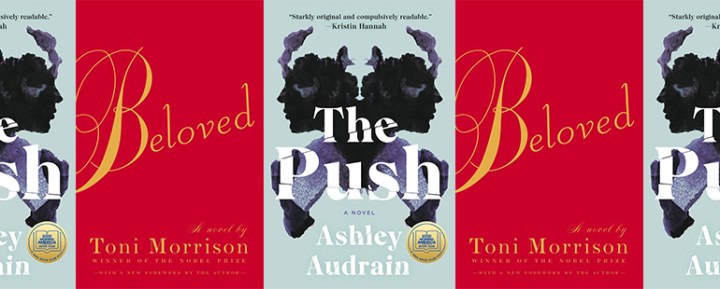
I’ve been on the lookout for contemporary gothic novels by women for research I’m doing on my next novel, and Ashley Audrain’s new book The Push came to me at exactly the right moment. I was blown away by its intricate structure and creepy, claustrophobic content. I loved the way Audrain used the gothic form to craft a story about motherhood, and saw her as working within a maternal gothic tradition that goes all the way back to Mary Shelley in Frankenstein. Audrain’s book has so much to say about white, upper middle class motherhood and I felt myself reflected in much of what she wrote–the insistent pressure to talk about how “it’s all worth it!”, the lack of social and familial connections, the taboos around asking for help were all familiar.
As I was reading, I was also struck by similarities to Toni Morrison’s Beloved, which I wrote my Master’s thesis on. I started taking craft notes on the points of connection, and eventually found that I was sitting on an essay idea that I was excited about. I am so grateful to have had the opportunity to work with Ellen and Carly at Ploughshares. They were both such smart, kind editors who helped me get this piece into good shape. If you’re interested you can read the essay here.
“A Mother is Not a Zero-Sum Game” Up at The Normal School
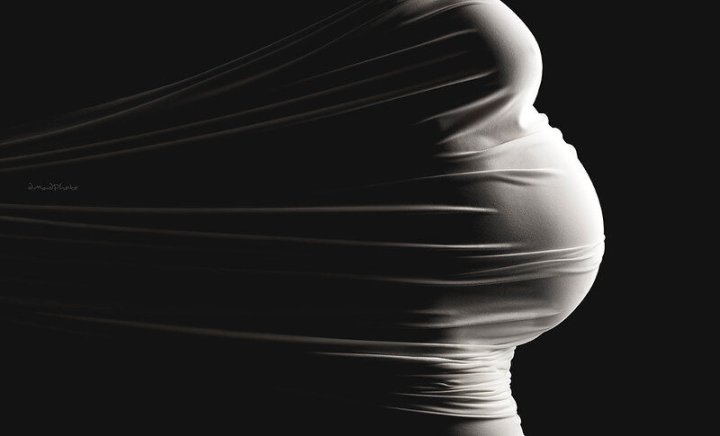
My essay, “A Mother is Not a Zero-Sum Game” is up at The Normal School. It’s about my experiences during pregnancy, labour, and the early postpartum months.
Throughout that time—and even now— I felt so betrayed by my body and by the medical system. I’d had a difficult pregnancy, a difficult labour, and then a complicated, incomplete recovery. I’d first gone into pregnancy thinking it would be easy—I’d weathered worse, I told myself, and I’d get through it unscathed. Well. I was wrong. And as I was dealing with birth injuries and other serious medical issues stemming from labour, there was this overwhelming social pressure to distill all of my experiences into the narrow, oxymoronic framework of sleepless joy.
Since the only way I can make sense of anything is by writing it down, I started taking notes in a single document while still in the thick of it all. Every day, I laid down new sentences, paragraphs, and fragments in an effort to understand what was happening to me. The fragments gradually started to take a shape, eventually coalescing into an essay. I am so grateful to the Normal School for publishing it.
Since it’s gone up, I’ve been overwhelmed by the responses I received from women on social media. So many mothers reached out to thank me because they saw so much of their own experiences reflected in my story. I was completely unprepared for how many other women have silently endured labour trauma, and I’m so grateful to all who’ve reached out to share their own stories with me.
What is abundantly clear is that we need to make more space for women to be honest about our experiences—no matter how messy or complicated or uncomfortable those experiences may be.
 Elaine van der Geld